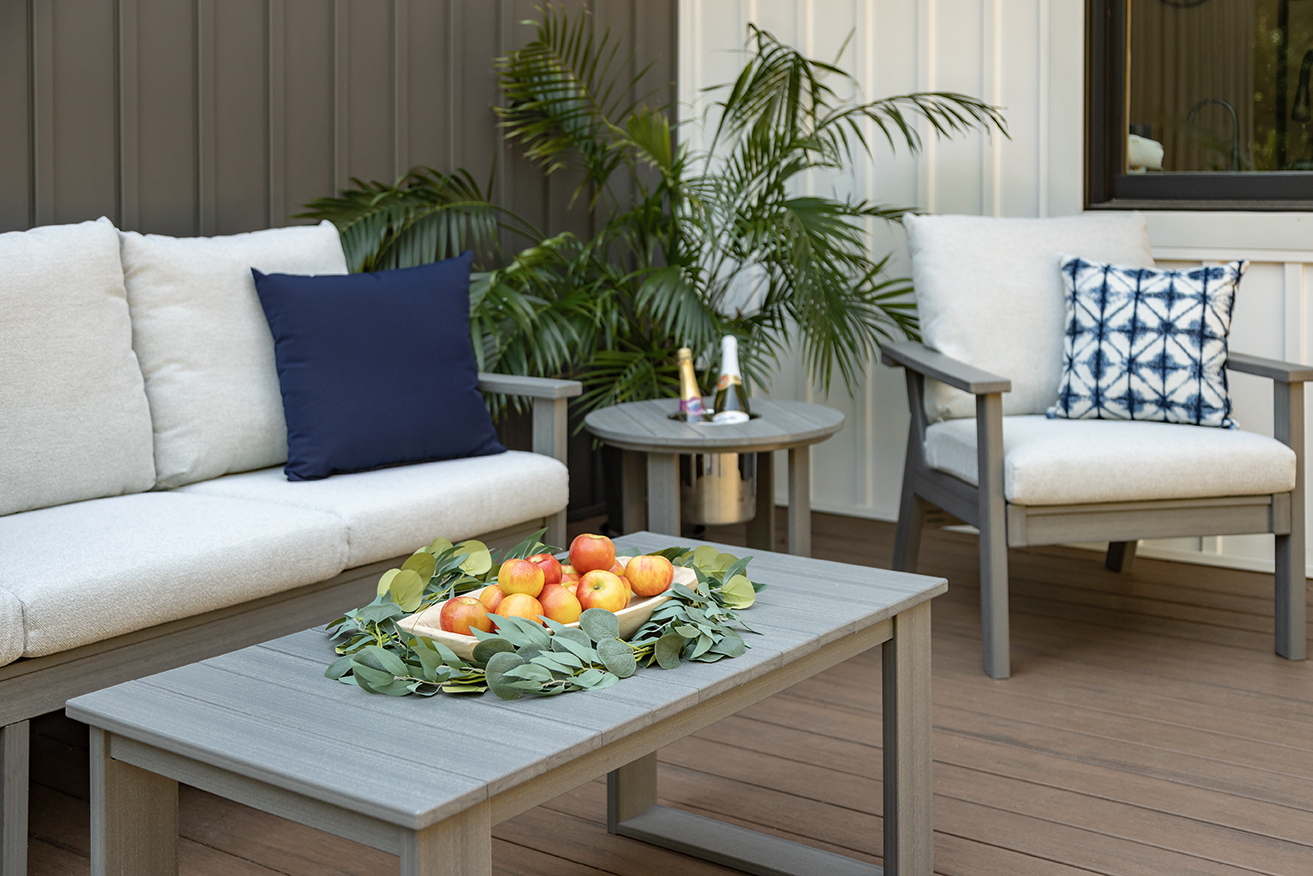

The best color palette for your outdoor furniture starts with three things: your home’s exterior colors, your landscape, and how much natural light your space receives. Match your furniture colors to these three anchors and your outdoor space will look intentional, cohesive, and beautiful from day one.
The most successful outdoor color palettes follow a simple process: start with the home exterior as your foundation, let the landscape inform your accent tones, and use light conditions to determine whether warm or cool shades will read best in your specific space. This guide walks you through each step so you can select a color palette with total confidence. Browse all Casual Comfort poly furniture colors here.
How Do You Pick the Best Color Palette for Outdoor Furniture?
You pick the best color palette for outdoor furniture by working outward from what already exists in your space. Your home’s exterior sets the dominant tone, your landscaping provides natural accent colors, and your light conditions determine which shades will look their best throughout the day. Once you understand those three inputs, choosing poly furniture colors becomes a straightforward decision rather than a guessing game.
A complementary color strategy pairs furniture colors that sit opposite your home’s exterior on the color wheel and creates eye-catching contrast. A streamlined strategy pulls colors from the same family as your home’s siding and creates a calmer, more cohesive look. A neutral base strategy anchors the space in white, gray, or tan and lets you bring in personality through cushions, planters, and accessories.
Most Casual Comfort customers land on one of these three approaches. This color guide offers a helpful overview of how complementary and analogous color relationships work if you want to go deeper on color theory before making your selection.
Start With Your Home’s Existing Colors
Your home’s exterior is the most important starting point for any outdoor furniture color palette. The siding, trim, roof, stone, and brick all contribute tones that your furniture colors need to work with, not against.
Look closely at both the primary color and the undertones. A gray house with warm beige undertones pairs very differently with outdoor furniture than a cool blue-gray home does. These differences matter more outdoors because natural light shifts throughout the day and reveals undertones that indoor lighting tends to mask.
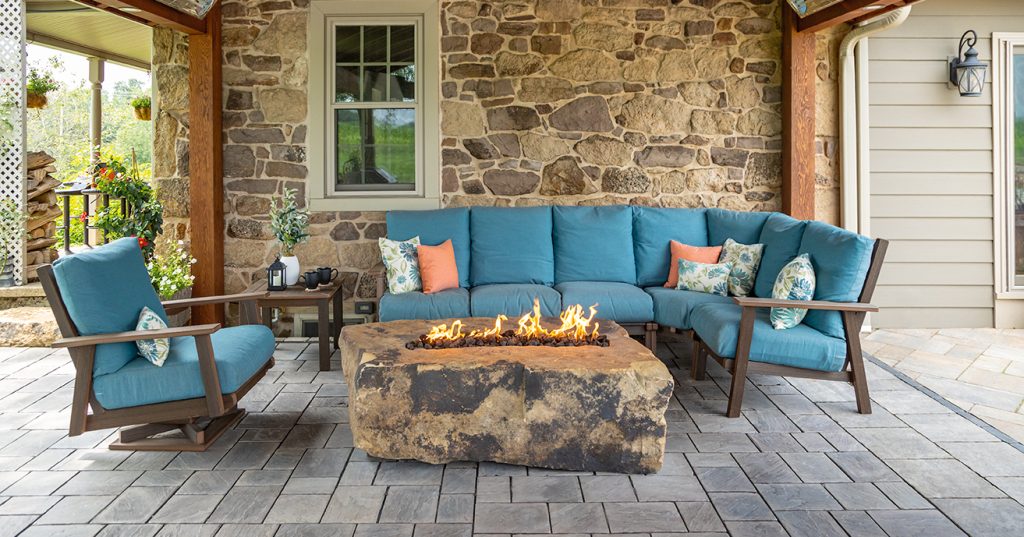
Complementary color strategy
A complementary color palette pairs colors that sit opposite each other on the color wheel. If your home exterior runs warm, in tans, creams, or terracotta, outdoor furniture in deep greens or teals creates beautiful contrast. If your siding is navy or dark blue, seashell, ice blue, or dove gray poly furniture delivers a striking, balanced result.
Analogous color strategy
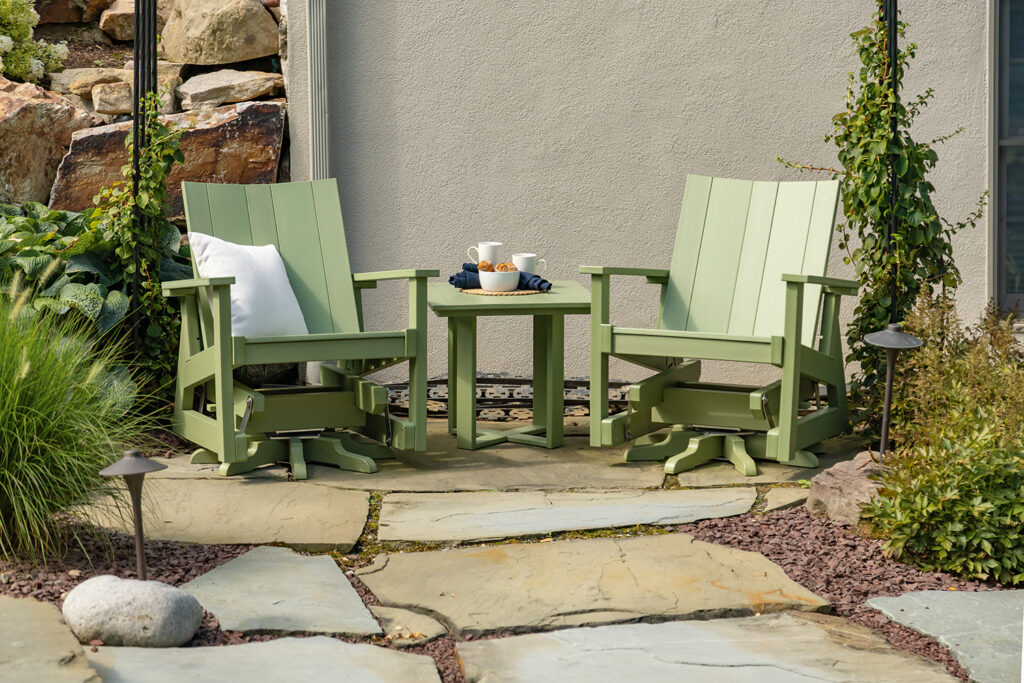
An analogous color palette draws from colors that sit next to each other on the color wheel and creates a harmonious, cohesive feel. If your home is painted a warm sage green, choosing poly furniture in a slightly lighter laurel green or a bright lime green keeps the outdoor space feeling intentional without being monotonous.
This approach suits homeowners who prefer a calm, nature-forward aesthetic rather than bold contrast between the home and the furniture.
Neutral base with accent pops
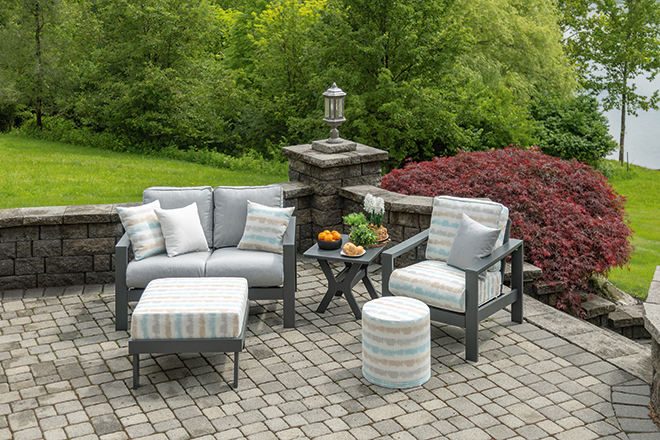
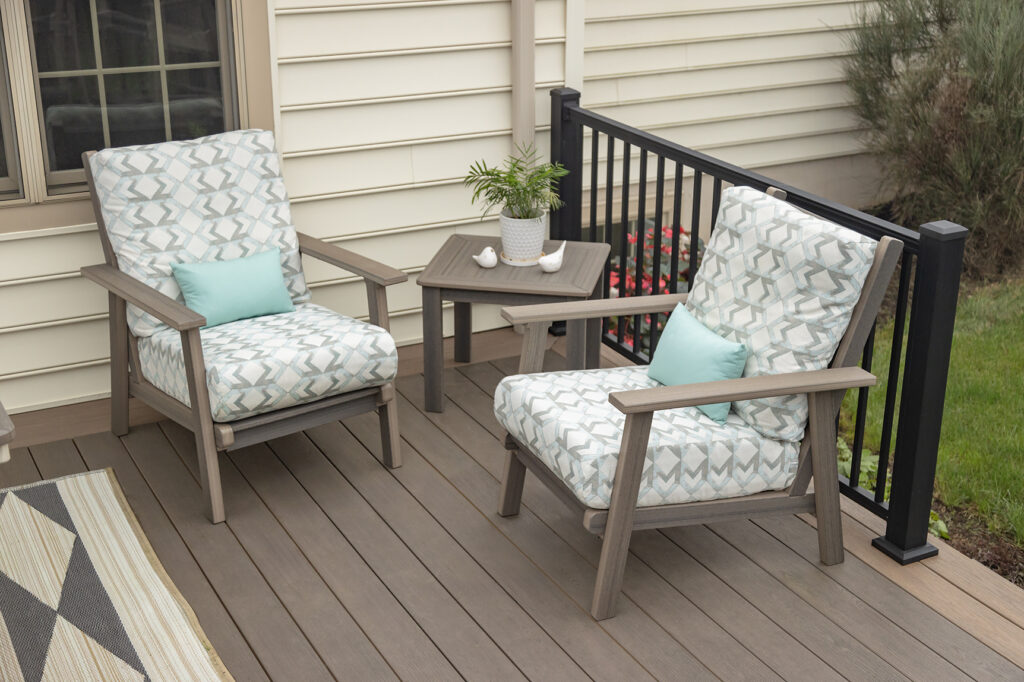
One of the most flexible outdoor color palette strategies anchors the space in a neutral poly furniture color, such as white, driftwood, or weathered gray, and then introduces color through cushions, planters, outdoor rugs, and accessories. This approach lets you update the seasonal look without replacing your furniture.
Casual Comfort’s white, coastal gray, and brazillian walnut poly furniture finishes stay popular year after year for exactly this reason. They work with virtually any home exterior and any accent color scheme you choose.
Let Your Landscape and Natural Surroundings Guide Your Palette
Your outdoor furniture sits within a living landscape of grass, trees, garden beds, hardscaping, and sky. The best outdoor furniture color palettes treat all these elements as part of the composition.
Green-heavy landscapes
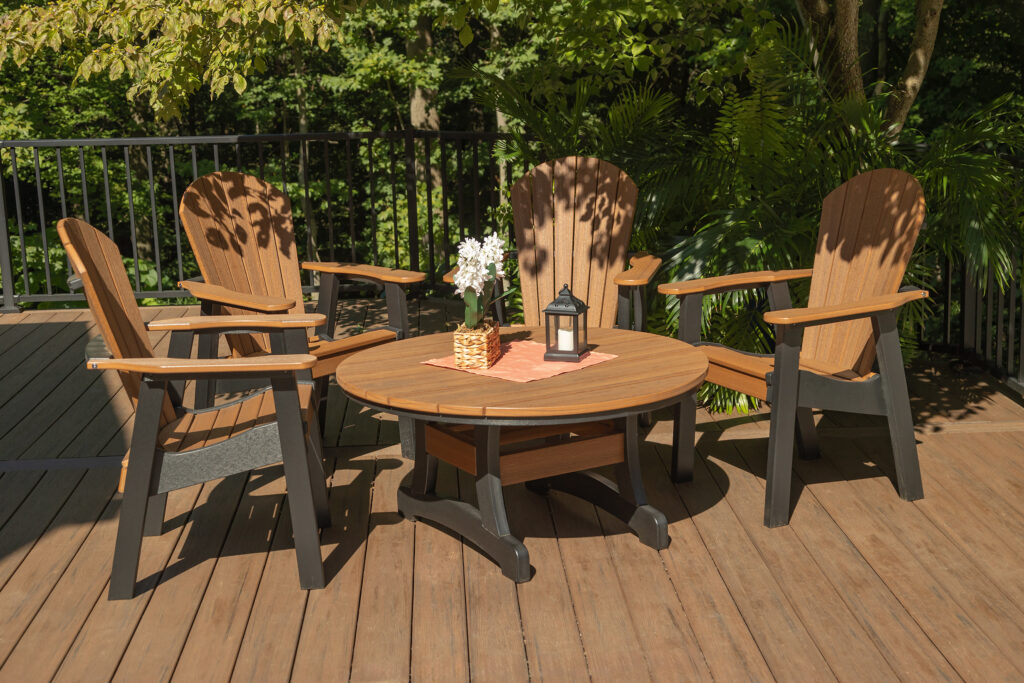
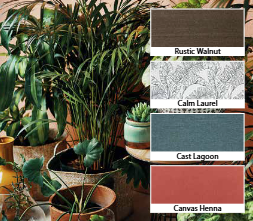
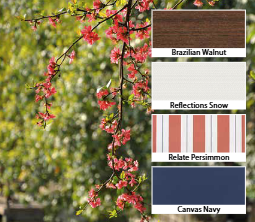
Lush lawns, mature trees, and abundant garden plantings give you a rich green backdrop to build against. Warm neutrals like white oak, brazillian Walnut, and rustic walnut poly furniture colors complement green landscapes naturally by echoing the organic tones of wood and earth. Crisp white creates fresh contrast against deep greenery and never looks out of place in a garden-forward setting.
Cooler poly furniture colors like slate blue, gray, and royal blue work beautifully against green backdrops too, especially in shadier settings where the cooler tones of the furniture add depth and dimension to the space.
Coastal and waterfront settings
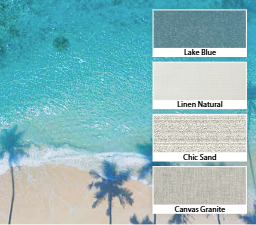
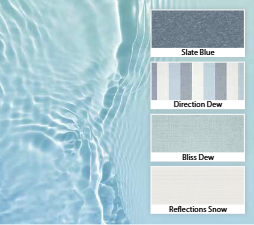
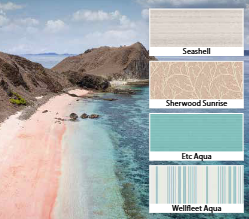
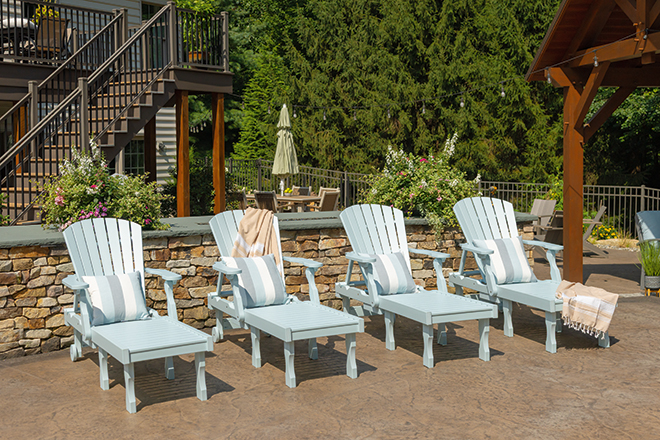
Coastal outdoor spaces follow their own color logic. The blues, greens, and sandy neutrals of a waterfront environment call for furniture colors that feel fresh and airy. Casual Comfort’s most popular poly furniture colors for coastal settings include seaglass, ice blue, lake blue, and coastal gray.
Very dark colors in full-sun coastal settings absorb more heat and can feel visually heavy in a space that benefits from a light, breezy aesthetic. If you love darker tones, use them as accents on conversation chairs or side tables. Keep larger seating pieces in lighter finishes.
Desert and southwestern landscapes
Warm, earthy outdoor furniture color palettes thrive in desert and southwestern settings. Weatherwood, nutmeg, brown, and brazillian walnut echo the natural tones of the landscape. Pair warm furniture tones with bright white accents for contrast. Another option is to commit fully to warm tones throughout for a cohesive, sunbaked aesthetic.
Mountain and woodland settings
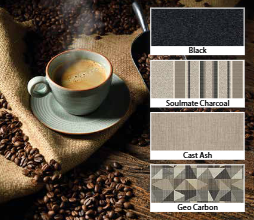
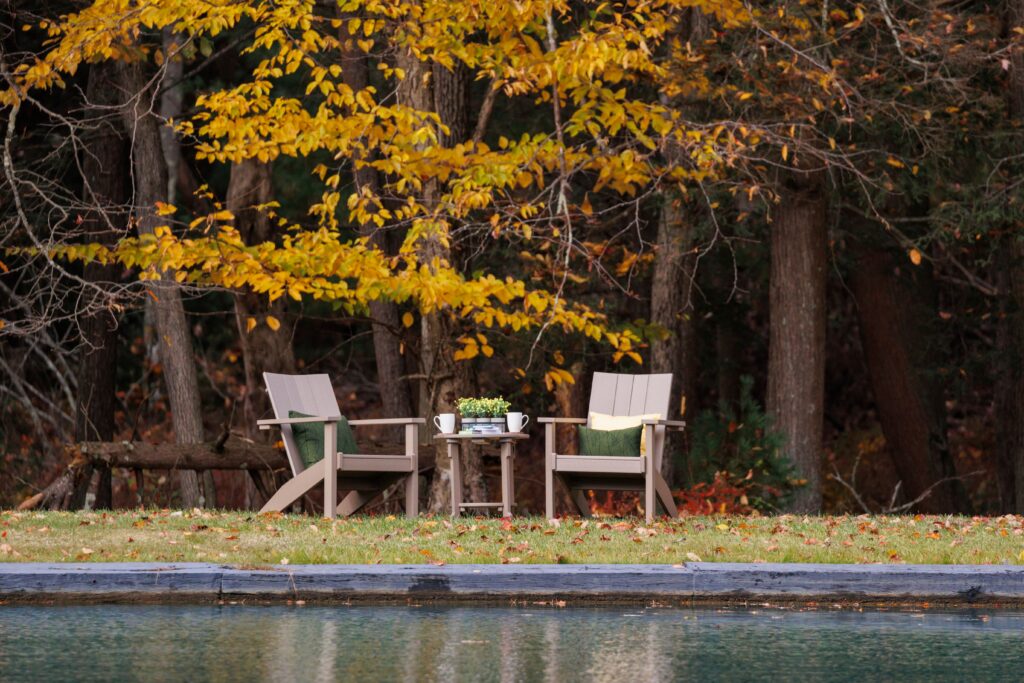
Homes surrounded by forests, mountains, or rustic landscapes call for grounded, natural-looking outdoor furniture palettes. Deep forest greens, rich browns, charcoal grays, and bark tones connect the furniture visually to the surrounding environment. Lighter neutrals like weathered birch and dove gray contrast without feeling out of place against a natural backdrop.
Factor in Sun Exposure and Lighting Conditions
Light changes everything when it comes to outdoor furniture color. A poly furniture color that looks perfect in a showroom or on a screen can read completely differently once it sits in your specific outdoor space. Accounting for light conditions before you decide saves you from surprises after delivery.
Full sun spaces
In full sun environments, lighter poly furniture colors keep their appearance better visually and absorb less surface heat. Whites, light grays, tans, and soft blues perform well in high-sun settings. Darker colors like black, deep navy, and dark green feel more comfortable in shaded conditions and can absorb significant heat in direct full sun.
One of the key advantages of Casual Comfort poly furniture is that our HDPE poly lumber comes manufactured with premium UV stabilizers. In the most intense sun environments, our colors hold up over years of exposure. You don’t need to worry about the dramatic fading you see in painted wood or lower-quality resin furniture.
Shaded and covered spaces
Shaded porches, covered patios, and pergola spaces give you much more freedom with deeper, richer poly furniture colors. Deep blues, charcoal grays, and dark greens look stunning in covered outdoor rooms where the light is softer and more consistent. These deeper tones bring warmth and coziness to shaded spaces in ways that lighter colors cannot always achieve.
Morning vs. evening use
Consider when you use your outdoor space most often. Morning light runs cooler and more golden, which tends to flatter warm-toned outdoor furniture colors. Evening light is warm and directional, which enriches deeper colors and creates a moodier, more intimate atmosphere. If your space primarily serves as an evening retreat, lean toward richer, deeper poly furniture color. This will give you maximum impact at the hour you actually use it.
Two-Tone and Multi-Color Poly Furniture Combinations
Casual Comfort poly furniture gives you the ability to mix and match colors to create a custom two-tone look. Many customers choose a neutral frame color paired with a bolder first color. This adds visual interest without overwhelming the space.
Classic two-tone combinations
Some of the most popular Casual Comfort two-tone poly furniture combinations include:
- White frame with Lake Blue slats for a crisp, nautical look
- Black frame with Coastal Gray slats for a modern, high-contrast aesthetic
- Weatherwood frame with Green slats for a nature-forward, grounded palette
- White Oak frame with Weathered Birch slats for a warm, cottage-style feel
Mixing furniture pieces across the space
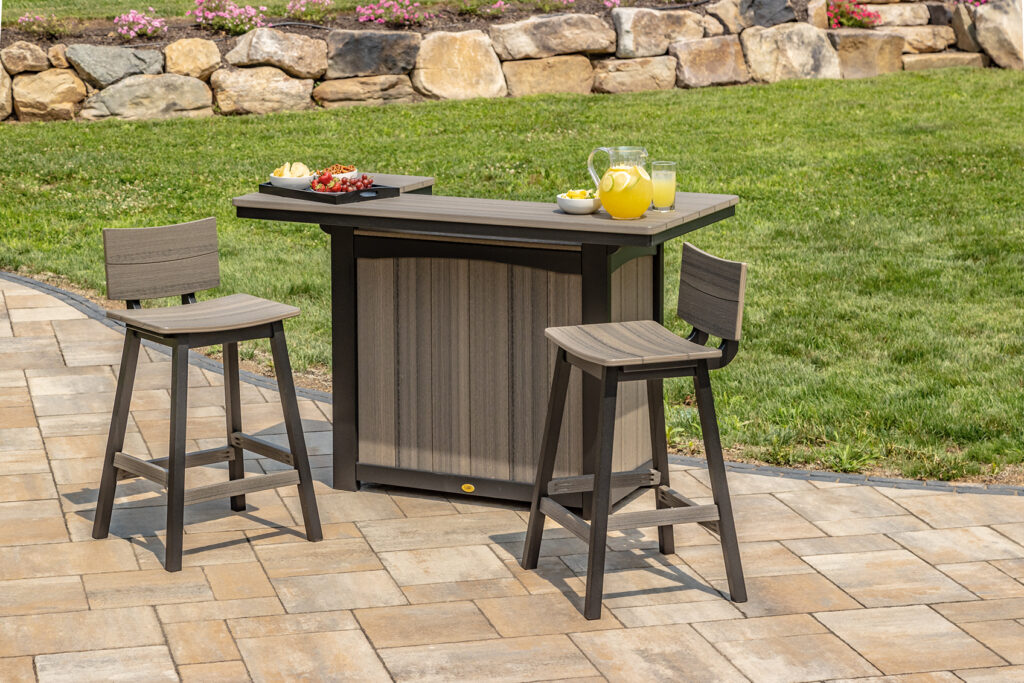
You do not need to use the exact same color across every piece of outdoor furniture in your space. Mixing related colors adds depth and visual interest to the overall composition. A common approach anchors the space with a neutral sofa or dining set. Then, you can introduce a bolder accent color through side chairs, bar stools, or Adirondack chairs.
Casual Comfort’s Color Visualizer enables you to see what different color pairings will look like across their furniture collection, which will help you build a cohesive multi-piece outdoor palette.
Timeless Colors vs. Trendy Colors
Outdoor furniture represents a long-term investment, especially when you choose Casual Comfort poly furniture built to last over 20 years. That longevity changes the color decision in an important way.
The case for timeless outdoor furniture colors
Classic outdoor furniture colors, including whites, grays, tans, greens, and blues, have stayed popular for decades because they work across a wide range of home styles, age gracefully alongside changing landscaping and architectural updates, and never feel jarring or out of place. If you plan to stay in your home for a long time and want furniture that always feels current, a timeless color palette is the smart, safe choice.
The case for bold or on-trend colors
Bold poly furniture colors give you a powerful way to express personality and create a space that genuinely feels like your own. Because Casual Comfort poly furniture holds its color so well over time through HDPE through-body pigmentation, a bold color you love today will still look vibrant many years from now.
The key question to ask yourself is whether the color you love is one you want to live with for decades, or whether it follows a trend that might feel dated in five years. For guidance on which outdoor color trends have genuine staying power, the Pantone Color Institute’s outdoor trend reports offer a useful reference point from the industry’s leading color authority.
How to Test Outdoor Furniture Colors Before You Commit
Color looks different in person than it does on a screen, and it looks different in your specific outdoor space than it does anywhere else. These are the practical steps Casual Comfort recommends before you make a final color decision on poly furniture.
- Request color samples. Casual Comfort dealers provide physical poly lumber color samples so you can see and feel the actual material in your own space before you order.
- Look at samples at different times of day. Hold your sample in the morning, at midday, and in the evening to see how the color reads in your specific light conditions.
- Compare against your home exterior. Hold the sample against your siding, trim, and any stone or brick elements to evaluate how the colors work together.
- Compare against your existing outdoor elements. Check the sample against your deck boards, pavers, or concrete to confirm the tones complement each other.
- Live with it for a few days. Leave the sample outside in your actual space for two to three days before you commit. Colors settle into an environment in ways that a quick glance cannot capture.
To request color samples or speak with a Casual Comfort outdoor furniture specialist, find your nearest local Casual Comfort furniture dealer.
Outdoor Furniture Color Palette Ideas by Style
Modern and contemporary
Charcoal gray, black, and crisp white poly furniture colors define the modern outdoor aesthetic. Pair these finishes with concrete, steel, or composite decking for a clean, architectural look. Casual Comfort’s gray and black finishes rank among our top sellers for modern home designs.
Coastal and nautical
Whites, blues, greens, and sandy neutrals capture the coastal spirit. Layer these tones across your poly furniture pieces for a relaxed, beach-house feel that works equally well in actual coastal locations and landlocked homes that draw inspiration from the water.
Farmhouse and rustic
Weathered grays, reds, whites, and warm wood tones create the farmhouse outdoor palette. These colors pair naturally with shiplap, galvanized metal accents, and wooden pergolas.
Tropical and resort-style
Bold, saturated poly furniture colors bring resort energy to a backyard space. Bright blues against vibrant tropical greenery, or yellow and turquoise combinations, evoke a Caribbean setting. These palettes perform best in warm climates with lush landscaping and ample sunshine.
Traditional and classic
Deep forest greens, classic whites, and warm cedar tones define the traditional outdoor furniture color palette. These combinations have stayed beloved for generations and integrate effortlessly with formal garden layouts, brick exteriors, and established trees and hedgerows.
Why Color Choice Matters More With Poly Furniture
When you choose poly furniture from Casual Comfort, color is not a surface treatment. It lives inside the material itself through a process called through-body pigmentation, where colorants mix directly into the HDPE before the extruder shapes it into poly lumber boards.
This means your color choice is permanent in the best possible way. There is no paint to chip, no stain to fade, no coating to peel. The color you select will look virtually the same in 20 years as it does today, especially with our UV-stabilized HDPE formulation.
This stands in significant contrast to painted wood or lower-quality resin furniture, where color fades and surface treatments require ongoing maintenance. With Casual Comfort poly furniture, the color decision you make at purchase is the color story your outdoor space tells for decades. Explore the full Casual Comfort poly furniture collection to start building your perfect outdoor palette.
Frequently Asked Questions About Outdoor Furniture Color Palettes
What is the most popular outdoor furniture color?
White, grays, and blues consistently rank as the most popular outdoor furniture colors across all categories. At Casual Comfort, our top-selling poly furniture colors include White, Coastal Gray, Slate Blue, and Royal Blue. These tones work across a wide range of home styles, landscapes, and regional climates, which keeps them as perennial favorites season after season.
Should outdoor furniture match the house color?
Your outdoor furniture does not need to exactly match your home’s exterior color. A perfect match often looks flat and unintentional. Instead, aim for colors that complement your home’s palette by sharing similar undertones or sitting harmoniously on the color wheel. A contrast that reads as deliberate almost always looks more visually appealing than an exact match.
How do I choose outdoor furniture colors for a small patio?
For small patios and compact outdoor spaces, lighter poly furniture colors make the space feel larger and more open. Whites, light grays, and soft neutrals serve small areas well. Very dark colors as the dominant tone in a small space can make the area feel closed in. That said, a single accent chair in a bold color adds personality without visually shrinking the overall space.
Can I mix different poly furniture colors in one outdoor space?
Absolutely. Mixing poly furniture colors creates a layered, curated outdoor space that feels intentional rather than showroom-generic. Keep colors within the same family or choose colors that share a common undertone. Casual Comfort’s color guide includes specific mixing recommendations to help you build a multi-piece outdoor palette that works as a cohesive whole.
Do dark outdoor furniture colors fade faster than light ones?
With lower-quality outdoor furniture, dark painted surfaces and dyed materials tend to show UV fading more visibly than lighter ones. Casual Comfort poly furniture uses through-body HDPE pigmentation combined with premium UV stabilizers, which means our dark colors hold up remarkably well over time. Visit our warranty page for more information!
How does poly furniture color hold up over time?
Casual Comfort poly furniture uses HDPE poly lumber with color pigments mixed directly into the material before extrusion. Because the color runs all the way through the board rather than sitting on the surface, it cannot peel, chip, or flake away. Combined with our UV stabilization package, our poly furniture colors remain vibrant and true for decades with no painting, staining, or refinishing required.
What outdoor furniture colors work best near a pool?
Pools call for colors that complement the blue-green tones of the water. White, light gray, and sandy neutrals create a fresh, resort-like aesthetic at poolside. Coastal Blue, Sea Glass Green, and Turquoise poly furniture colors look stunning near pools when you want to lean into the aquatic palette.
Can I see Casual Comfort poly furniture color samples before I order?
Yes. Casual Comfort offers physical poly lumber color samples so you can evaluate the actual material in your specific outdoor environment before you place an order. To request color samples or speak with a Casual Comfort outdoor furniture specialist, find your nearest local Casual Comfort furniture dealer.