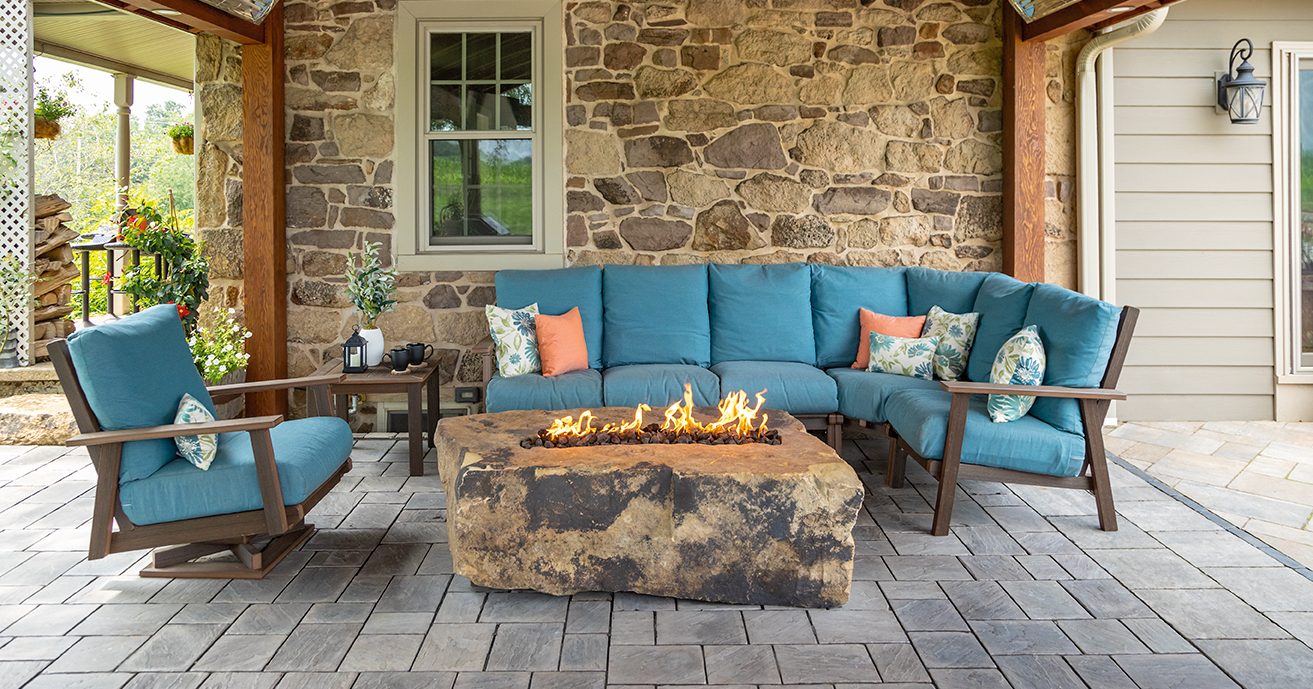

Poly Furniture is made with High-Density Polyethylene (HDPE) Lumber
If you’re shopping for outdoor furniture, you’ve likely seen local stores and online dealers advertise “poly furniture,” and you may wonder what it’s made of. Manufacturers make poly furniture from high-density polyethylene (HDPE). They most commonly source it from recycled post-consumer items like milk jugs and detergent bottles. Then, they process the plastic into sturdy lumber boards that they can cut, shape, and assemble just like wood, but without any of wood’s biggest drawbacks.
It looks like wood, it comes in dozens of colors, and brands like ours at Casual Comfort rave about how low maintenance it is. But what is it, really?
In this blog, we break down exactly what poly furniture is made of, how manufacturers produce it, why it performs so well outdoors, and what you should look for when you’re ready to buy. Whether you’re outfitting a backyard patio, a lakefront deck, or a covered porch, understanding the material helps you invest with confidence.
Looking to browse our full selection? Visit our Casual Comfort poly furniture collection to see all the styles we carry.
The Core Material: High-Density Polyethylene (HDPE)
Understanding how manufacturers make poly lumber explains why poly furniture performs so well outdoors. The manufacturing process involves several carefully controlled steps, from raw material all the way to your outdoor furniture.
Step 1: Collection and sorting of HDPE waste
The raw material for poly lumber starts as post-consumer HDPE plastic. They source this material primarily from milk jugs, juice containers, detergent bottles, and similar packaging. Recycling programs collect these materials, workers sort them by resin type, and they thoroughly clean them to remove contaminants.
Step 2: Grinding and Pelletizing
Processors grind the cleaned HDPE containers into small flakes or chips, then melt them and reform them into uniform pellets. This pelletizing step ensures consistent material quality before the lumber manufacturing process begins.
Step 3: Colorant mixing
One of the greatest advantages of HDPE poly lumber is that they mix the colorants directly into the material before extrusion. Since pigment runs all the way through the material rather than coating just the surface, scratches and scuffs are far less visible than they would be on painted wood. The coloration does not peel, flake, or wear off.
Casual Comfort offers poly wood furniture in several standard colors, from classic white and black to natural wood grain poly lumber. You will not need to paint or stain your poly furniture!
Browse all available color options in our Casual Comfort Catalog.
Step 4: Extrusion into lumber profiles
The colored HDPE pellets are fed into an industrial extruder, where they are heated, compressed, and forced through a die in a specific shape, such as boards and planks. As the material exits the extruder, it is cooled in a water bath and cut to precise lengths.
Different manufacturers use different extrusion methods. Some produce solid boards; others use a cellular or hollow-core design to reduce weight while maintaining structural integrity. Casual Comfort uses solid and high-density cellular HDPE across our product lines to ensure maximum durability and long-term performance.
Step 5: Furniture assembly
After producing the poly lumber, the assembly team cuts and shapes it using standard woodworking equipment. They construct the furniture frames from powder-coated aluminum to resist corrosion and ensure structural integrity in the poly wood furniture. All hardware used by Casual Comfort is marine-grade stainless steel to prevent rusting in coastal or poolside environments.

The Role of Aluminum in Poly Furniture Frames
Seating surfaces, tabletops, and decorative slats of poly furniture are made from HDPE lumber. However, many poly furniture pieces use powder-coated aluminum for the structural frame. This combination is intentional and highly effective:
- Aluminum is extremely lightweight, making poly furniture easier to move and rearrange on a deck or patio.
- It is rust-proof and corrosion-resistant, making it ideal for coastal, poolside, and high-humidity environments.
- It provides a rigid, strong frame without adding unnecessary weight or bulk to the piece.
See all Casual Comfort outdoor seating options on our outdoor furniture product page.
How Does Poly Furniture Compare to Other Materials?
To fully understand what poly furniture is made of and why it matters, compare HDPE poly lumber directly to the materials it most often replaces.
Poly furniture vs. wood
Traditional wood outdoor furniture made from teak, cedar, or redwood is beautiful but demanding.You should regularly sand, seal, oil, or stain it to prevent weathering, peeling, and cracking. Even naturally rot-resistant woods will deteriorate if neglected. Poly lumber furniture does not require this same level of maintenance. It will not absorb moisture, will not splinter, and holds its color without any seasonal treatment.
Wood does have an advantage in perceived natural warmth and in initial cost for lower grades of lumber. But over a 10-to-20-year lifespan, Casual Comfort poly furniture typically wins on total cost of ownership. It’s important to factor in ongoing maintenance costs and eventual wood replacement.
For a detailed side-by-side comparison, see this poly vs. wood furniture guide.
Poly furniture vs. metal
Steel and wrought iron outdoor furniture is heavy, strong, and classic in appearance. However, it rusts unless regularly maintained and re-coated. Powder-coated aluminum offers a lighter, more corrosion-resistant alternative to steel, but it can still dent and eventually chip if the coating becomes damaged. In contrast, poly lumber furniture contains no metal in its surface components, so the HDPE material naturally resists rust and corrosion.
Poly furniture vs. wicker
Natural wicker degrades quickly outdoors. It dries out, cracks, and eventually unravels with seasonal exposure. HDPE poly lumber furniture is simpler in construction and more durable over a 20-plus year lifespan. However, it does have a different aesthetic than the classic appearance of wicker furniture, so that’s a factor customers need to consider when evaluating their options for outdoor furniture.
Is Poly Furniture Actually Eco-Friendly?
One of the most compelling aspects of Casual Comfort poly furniture is its sustainability.
Recycled Content Inclusions
Most poly furniture is made from post-consumer recycled HDPE. This is material that would otherwise enter a landfill or in a waterway or ocean environment. By transforming that plastic into high-value, long-lasting furniture, manufacturers are giving discarded plastics a genuinely meaningful second life.
Durability as sustainability
A piece of Casual Comfort poly furniture that lasts over 20 years with minimal maintenance is inherently more sustainable than a wood chair requiring replacement every 5 to 10 years. The full environmental cost of production is spread over a nearly doubled longer useful lifetime.
What to Look for When Buying Poly Furniture
Now that you understand what poly furniture is made of, here is a practical guide to evaluating quality when shopping for HDPE outdoor furniture.
Weight as a quality indicator
Higher-density, higher-quality poly lumber is heavier. A flimsy, lightweight poly chair likely uses lower-density or hollow-core material that will not hold up as well over time. When evaluating poly furniture in person, a quality piece of poly furniture should be relatively heavy when you try to lift it.
UV stabilizers and color warranty
Ask about UV protection. Better manufacturers use a premium UV stabilization package and offer color-fade warranties of 10 to 20 years. Casual Comfort backs our poly wood furniture colors with an industry-leading warranty because we are confident in the HDPE poly lumber manufacturers that we choose to partner with, Renew and Tangent.
Hardware quality
The metal hardware holding poly furniture together should be marine-grade stainless steel, not zinc-coated or plain steel fasteners, which will rust and stain the furniture surface. This is one of the easiest corners to cut in poly wood furniture manufacturing and one of the most common shortcuts taken by budget brands. Casual Comfort poly furniture uses stainless steel hardware to ensure top-of-the-line quality.
Frame construction
Check whether the frame is made from powder-coated aluminum, all-HDPE poly lumber, or steel. For most residential outdoor use, aluminum frames are ideal. Avoid steel-frame poly furniture if you live near the coast or plan to use the furniture near a pool or spa.
Warranty length
Quality poly furniture should come with a minimum 15-year warranty. Many premium brands, including Casual Comfort, offer 20-year warranties. A short warranty on poly furniture is a strong signal that the manufacturer lacks confidence in their material quality.
Review our full warranty details on the Casual Comfort warranty page.
Frequently Asked Questions:
Does poly furniture get hot in the sun?
HDPE poly lumber does absorb some heat and will feel warm to the touch on a hot, sunny day, similar to a composite deck board. It will not get as hot as metal furniture and will not burn bare skin on contact, but it is worth noting for cushion-free seating in direct full sun. Lighter color finishes absorb less heat than darker ones.
Can you paint or stain poly furniture?
There is no need to paint or stain poly lumber furniture, and that is actually one of its greatest advantages. Because the color runs through the entire material, the surface never needs treatment. Standard paints and stains do not adhere well to HDPE, and oftentimes this will void warranties with most poly outdoor furniture manufacturers.
Will poly furniture crack in cold weather?
Quality HDPE poly lumber has excellent cold-weather performance. It becomes slightly more brittle at extreme temperatures below negative 20 degrees Fahrenheit, but for normal seasonal cold in most of North America, it holds up without cracking or splitting. Unlike wood, poly lumber does not absorb moisture and then crack through freeze-thaw expansion cycles.
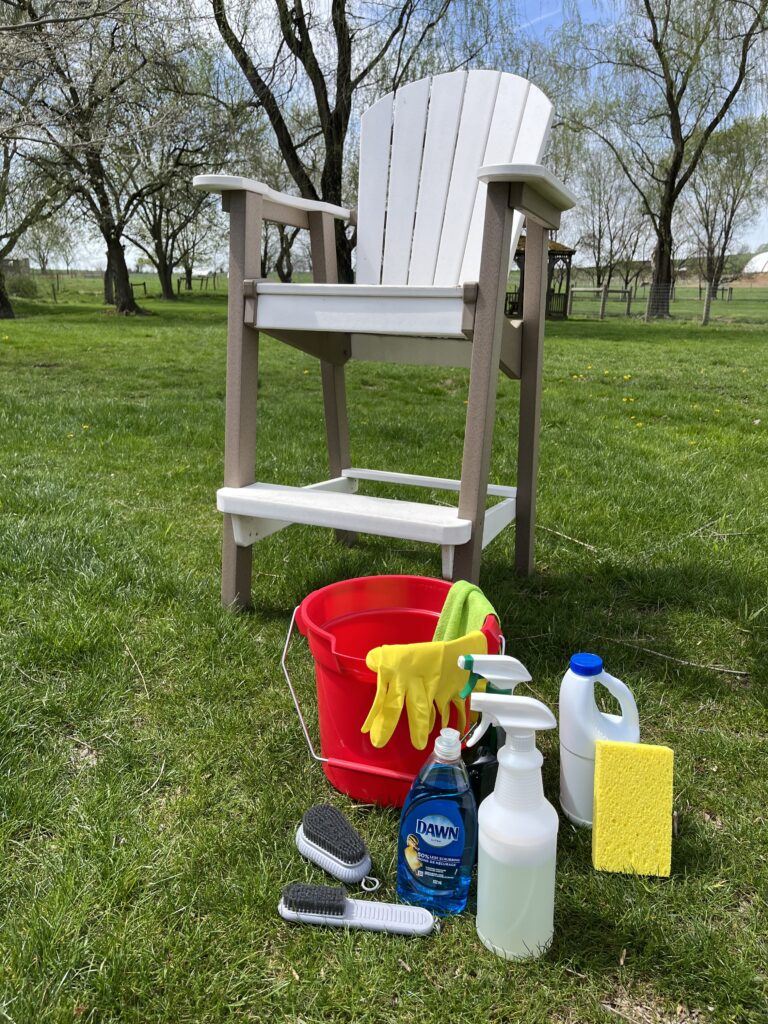
How do you clean poly furniture?
This is one of poly furniture’s most practical advantages. Routine cleaning requires nothing more than soap and warm water. For tougher stains including bird droppings, tree sap, or mildew, a mild bleach solution or a cleaner like Simple Green works effectively. Because the non-porous surface of HDPE poly lumber does not absorb stains, cleanup is pretty low maintenance!
For more care tips, see our poly furniture cleaning video.
Does poly furniture fade over time?
All outdoor materials experience some color shift over time. Quality poly outdoor furniture made with UV stabilizers and color-through HDPE pigmentation fades much more slowly than painted wood or dyed fabric. Casual Comfort backs our furniture colors with a long-term color warranty. You may notice a very slight shift over many years of intense sun exposure, but nothing approaching the dramatic graying and cracking of untreated wood.
What is the lifespan of poly furniture?
When properly cared for and made from high-quality HDPE poly lumber, poly outdoor furniture routinely lasts 20 years or more. This is significantly longer than most wood, metal, or resin wicker alternatives. The longevity of poly furniture is one of the primary reasons Casual Comfort customers consider it the best long-term value in outdoor furniture.
Now you Know the Basics of Poly Furniture!
Poly furniture, made from recycled HDPE plastic processed into durable poly lumber, represents one of the most practical innovations in outdoor living. It combines the familiar aesthetic of wood slat construction with the performance and maintenance-free durability that only modern engineered materials can deliver.
Manufacturers produce the material to a high standard, and decades of residential and commercial outdoor use have proven its performance. It also offers genuine sustainability by diverting plastic waste from landfills and creating furniture built to last for multiple generations.
The primary tradeoff is upfront cost. Quality poly furniture carries a higher initial price than basic wood or metal alternatives. But for buyers who want outdoor furniture that looks beautiful, requires almost no care, and holds up for more than 20 years, the math strongly favors poly.
Casual Comfort has been helping customers find the right poly furniture for their outdoor spaces for years. Whether you are outfitting a covered porch, an open deck, a lakeside dock, or a commercial hospitality space, our team is ready to help.
Browse the full Casual Comfort poly furniture collection and find the perfect piece for your space.