
Best Coastal Poly Furniture for Beach Homes, Docks, and Waterfront Living
A Casual Comfort Guide to Choosing HDPE Poly Furniture That Thrives in Salt Air, Sun, and Humidity
The best coastal poly furniture is made from HDPE poly lumber. It resists salt air, shrugs off humidity, and holds its color through years of intense sun exposure. It never rusts, never rots, and never asks anything from you except an occasional rinse.
Living near the water is one of life’s great pleasures. But coastal environments are genuinely tough on outdoor furniture. Salt air corrodes metal. Humidity warps wood. UV radiation bleaches most materials within a few seasons. The good news is that HDPE poly furniture handles all those challenges without breaking a sweat.
At Casual Comfort, we handcraft our entire coastal poly furniture line in Lancaster County, Pennsylvania, using premium HDPE poly lumber and traditional Amish craftsmanship. Our furniture is available at our authorized dealer locations, many of which are coastal. Browse our full coastal-ready poly furniture collection here.
What Makes the Best Coastal Poly Furniture?
The best coastal poly furniture starts with one material: high-density polyethylene, or HDPE. HDPE poly lumber handles every challenge that coastal environments create.
Salt air is the primary enemy of most outdoor furniture near the ocean. It corrodes steel, oxidizes aluminum, and strips protective coatings from wood. HDPE is chemically inert. Salt air has no effect on it whatsoever. The material simply does not react.
Humidity is the second major challenge. High humidity causes wood to absorb moisture, swell, warp, and eventually rot. HDPE is non-porous, so you do not need to worry about rotting with your poly furniture.
UV exposure rounds out the coastal furniture challenge. Intense sun bleaches colors, degrades polymer surfaces, and breaks down wood grains. Casual Comfort uses poly lumber with UV stabilizers built directly into every HDPE board we use. Those stabilizers protect the color at a molecular level, keeping your coastal poly furniture looking vibrant through many years of sun exposure.
Together, those three properties make HDPE the clear winner for coastal outdoor living. For a detailed look at how the material works, read our guide: What Is Poly Furniture Made Of?
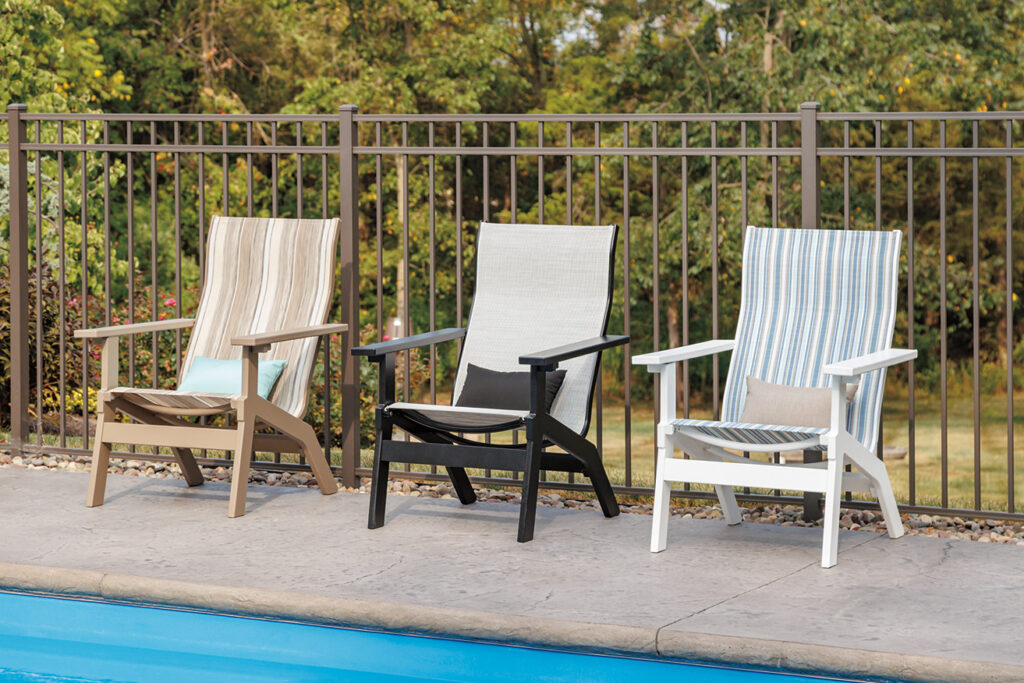
Why Coastal Environments Demand a Different Standard
Not all outdoor furniture fails at the coast at the same rate. But most of it fails faster than its manufacturers admit. Understanding why helps you make a smarter buying decision.
What Salt Air Does to Common Materials
Salt particles in coastal air are abrasive and chemically reactive. They settle on metal surfaces and accelerate oxidation. They work into paint and coating systems and cause adhesion failure from the inside out. Even stainless steel can show surface staining near the ocean when it isn’t made with the highest quality materials.
According to Galvanizers Association’s corrosion map, salt air corrosion rates near the ocean are significantly higher than inland environments. Materials that perform well in a suburban backyard can degrade dramatically within a single season at a beachfront property. The best coastal poly furniture simply removes corrosion from the equation entirely.
What Humidity Does to Wood
Coastal humidity cycles between high and low with tidal and weather patterns. Wood absorbs moisture during humid periods and releases it during dry ones. Each cycle causes the wood fibers to swell and contract. Over time, that repeated movement cracks joints, warps boards, and loosens hardware. Even teak, the gold standard of outdoor wood, requires regular oiling to resist coastal humidity long-term.
Poly furniture absorbs none of that moisture. The material stays dimensionally stable regardless of how the humidity swings. Joints stay tight. Boards stay flat. Hardware stays firmly seated.
What UV Does to Outdoor Furniture
Coastal properties often receive intense, unfiltered sun exposure for many hours each day. That UV load bleaches pigments, chalks polymer surfaces, and breaks down wood grain. Most painted wood furniture shows visible fading within two to three seasons at the coast. Stained wood fades even faster.
Casual Comfort uses a premium UV stabilization package integrated into the HDPE poly lumber itself. Furthermore, because our colors are through-body pigments rather than surface coatings, they do not chalk or peel even as surface UV exposure accumulates year after year.
The Best Coastal Poly Furniture Styles for Every Waterfront Space
Coastal outdoor living takes many forms. A beachfront deck calls for different furniture than a covered marina dock or a shaded lakeside porch. Fortunately, Casual Comfort builds the best coastal poly furniture across a full range of styles to suit every waterfront setting.
Best Coastal Poly Furniture: Adirondack Chairs for the Waterfront
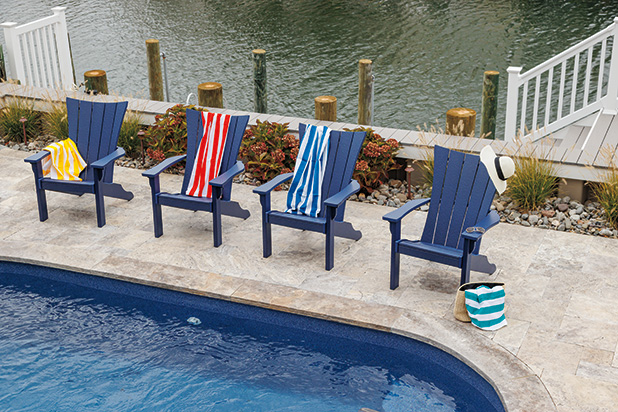
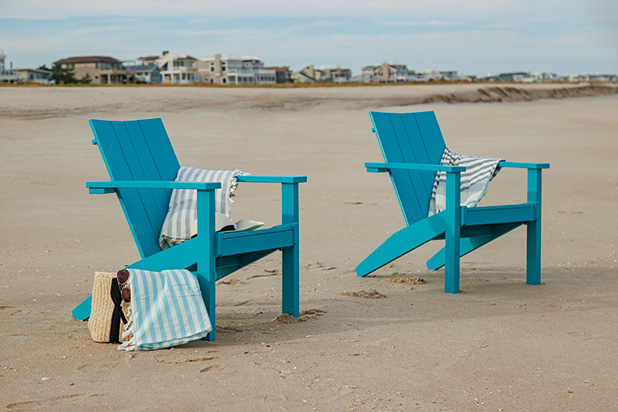
The Adirondack chair belongs at the water’s edge. Its wide armrests, reclined seat, and classic slatted profile feel perfectly at home facing the ocean, a lake, or a river. Casual Comfort builds each Adirondack chair by hand in Lancaster County, and every one ships ready to handle years of coastal exposure.
Our coastal customers love pairing Adirondack chairs in Slate Blue, Sea Glass Green, and White for a classic waterfront palette. Browse Casual Comfort Adirondack chairs here.
Porch Swings for Covered Coastal Porches
A covered porch overlooking the water deserves a porch swing that handles coastal air without complaint. Casual Comfort poly porch swings use the same premium HDPE poly lumber as the rest of our coastal line. They resist salt air, humidity, and UV equally well under a covered porch or in a semi-exposed setting.
For everything you need to know about choosing, sizing, and hanging a poly porch swing, read our complete guide: Poly Furniture Outdoor Porch Swing: The Complete Buyer’s Guide.
Dining Sets for Waterfront Entertaining
Coastal dining means fresh air, great views, and food that occasionally gets knocked over by the breeze. A Casual Comfort poly resin dining set handles all of it. The HDPE tabletop surface resists food spills, salt spray, and UV exposure equally well. The stainless steel hardware throughout each set resists corrosion even in direct ocean-facing exposure.
We build coastal dining sets in sizes ranging from intimate four-person configurations to large eight-person arrangements for waterfront gatherings.
Conversation Sets for Relaxed Coastal Living
A poly resin conversation set creates a gathering space that works beautifully on a waterfront deck, a marina patio, or a screened coastal porch. Pair a loveseat or two-person bench with matching armchairs and a central table and you have a complete outdoor room ready for years of use without a single coat of paint or sealant.
Best Coastal Poly Furniture: Coastal Benches and Dock Furniture
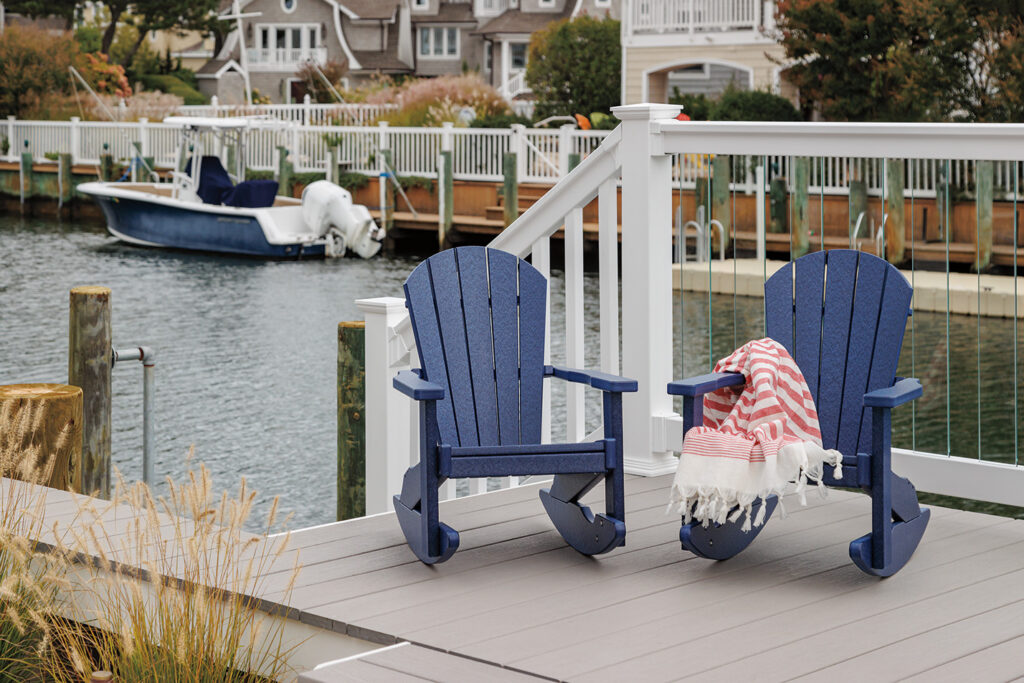
Dock furniture takes the hardest beating of any outdoor setting. It sits in direct sun, gets splashed with water, and faces constant salt air exposure. Poly benches and dock chairs handle those conditions better than any wood or metal alternative. Many of our customers place poly furniture directly on their docks year-round without any seasonal storage.
Coastal Color Palettes That Work With HDPE Poly Furniture
Color plays a powerful role in coastal outdoor design. The right palette connects your furniture to the water, the sky, and the natural landscape around you. Casual Comfort offers dozens of HDPE color options, and several work particularly beautifully in coastal settings.
Classic Coastal Whites and Neutrals
Crisp white poly furniture against a backdrop of blue water and sky is one of the most enduring coastal design combinations. White reflects heat, brightens shaded areas, and pairs with virtually every architectural style from Cape Cod to Key West. Weathered Birch offers a softer neutral alternative that echoes the weathered tones of natural beach colors without any of the maintenance real driftwood would require.
Ocean-Inspired Blues and Greens
Slate Blue and Sea Glass capture the tones of the water itself. These colors look especially beautiful in open, sun-drenched coastal settings where they echo the visual environment rather than contrasting with it. Many Casual Comfort customers use these shades for Adirondack chairs and porch swings while keeping dining tables in white or seashell for a layered, natural palette.
Sandy Neutrals and Warm Earthy Tones
Sandy neutrals like Weatherwood and Seashell bring the warmth of the beach itself into the furniture palette. These tones suit coastal properties with natural wood decking, cedar shingle siding, or warm stone hardscaping. They create a grounded, organic look that feels as comfortable on a Maine fishing dock as on a Gulf Coast resort patio.
Browse our suggested color pairings in the Casual Comfort poly furniture color guide.
Amish Craftsmanship: Built for the Long Haul
Casual Comfort builds every piece of coastal poly furniture by hand in Lancaster County, Pennsylvania. Skilled Amish artisans assemble each chair, swing, table, and bench in our workshop. That craftsmanship distinction matters more at the coast than almost anywhere else.
Coastal environments expose furniture to more stress than inland settings. Joints that fit loosely will loosen faster under salt air and humidity cycling. Hardware that falls short of marine-grade specification will rust and stain poly lumber surfaces within a season or two. Slat spacing that ignores drainage will hold standing water after rain.
Casual Comfort’s craftspeople address all of those concerns as a matter of course. They hand-fit every joint and specify marine-grade stainless steel hardware throughout every piece. They space slats for effective drainage in wet coastal conditions. And they inspect every finished piece before it ships.
Marine-Grade Stainless Steel Hardware
This detail deserves its own mention. Many poly furniture manufacturers use zinc-coated or standard galvanized hardware to reduce production costs. Those fasteners rust in coastal environments, leaving brown stains on the poly lumber surface and weakening structural connections over time.
Casual Comfort uses marine-grade stainless steel hardware throughout every piece in our coastal poly furniture line. Marine-grade stainless has an additional chrome-plated coating that provides additional durability. That hardware specification matches the long-term performance of the HDPE poly lumber itself.
How to Care for the Best Coastal Poly Furniture
One of the greatest practical gifts of the best coastal poly furniture is how little it asks of you. While neighboring wood and metal furniture demands regular sanding, sealing, and rust treatment, your Casual Comfort HDPE poly furniture needs almost nothing.
Here is the complete care routine for coastal poly furniture in any waterfront setting:
- Rinse with fresh water regularly to remove salt residue, especially after storms or heavy wave spray. A garden hose handles this in a few minutes.
- Wash with warm soapy water and a soft brush for routine cleaning. This removes accumulated salt, pollen, bird droppings, and general coastal grime.
- For tougher stains, apply a mild bleach solution (on white furniture only) or a gentle cleanser like Simple Green. Scrub lightly and rinse thoroughly. The non-porous HDPE surface releases stains easily.
- Check hardware connections at the start of each season. Tighten any fasteners that may have worked slightly loose over winter.
- Leave your furniture outside year-round with complete confidence. HDPE handles coastal winters, storms, and off-season conditions without any protection from you.
Comparing Poly Furniture to Other Coastal Furniture Options
Many materials are marketed as suitable for coastal use. It is worth understanding how they actually compare before you invest.
Poly vs. Teak
Teak is the traditional premium choice for coastal outdoor furniture. It naturally resists moisture and insects better than most wood species. However, even teak requires regular oiling to maintain its appearance at the coast. Without that treatment, teak grays and develops surface cracking over time. Additionally, most teak furniture today comes from questionable sourcing practices that raise legitimate environmental concerns.
Poly furniture requires no special treatment, lasts longer than teak in coastal conditions, and uses recycled post-consumer plastic rather than old-growth tropical hardwood. The Forest Stewardship Council’s guidance on tropical hardwood sourcing highlights why sustainable alternatives to teak are worth serious consideration. Poly furniture represents exactly that alternative.
Poly vs. Aluminum
Powder-coated aluminum is a popular coastal furniture choice because it resists rust better than steel. However, aluminum can pit and stain in direct salt air exposure over time, particularly when the powder coating chips or scratches. Furthermore, aluminum furniture often uses webbing, cushions, or other components that degrade faster than the frame itself.
Casual Comfort poly furniture contains no metal in its surface boards. Therefore, it simply cannot corrode. The entire surface is HDPE poly lumber, which salt air cannot affect.
Poly vs. Recycled Plastic Lumber Alternatives
Not all poly lumber is created equal. Some manufacturers use mixed plastic waste, high filler content, or lower-grade recycling streams to reduce costs. Those compromises affect UV stability, structural integrity, and long-term color retention.
Casual Comfort specifies premium-grade HDPE poly lumber across our entire coastal line. We use a high-purity formulation with an integrated UV stabilization package and through-body color pigmentation. That material specification, combined with Amish assembly and marine-grade stainless steel hardware, produces coastal poly furniture that genuinely performs for 20 years.
Best Coastal Poly Furniture: What to Look for Before You Buy
Choosing the best coastal poly furniture requires asking a few specific questions before you commit. Here is what Casual Comfort recommends you confirm with any coastal poly furniture manufacturer.
- Does the color run all the way through the material? Through-body pigmentation lasts. Surface coatings fail in coastal UV exposure.
- What UV stabilization package does the manufacturer use? Integrated UV stabilizers are more effective than surface-applied treatments.
- Is the hardware marine-grade stainless steel? Standard or galvanized hardware will rust in salt air environments. Marine-grade stainless will not.
- What is the color warranty? A manufacturer confident in their UV stabilization will back it with a meaningful long-term color warranty.
- Who assembles the furniture? Hand assembly by skilled craftspeople catches quality issues that automated lines miss.
Casual Comfort furniture meets each of those standards. We build with premium HDPE, through-body color, integrated UV stabilizers, marine-grade stainless hardware, and hand assembly by Amish craftspeople in Lancaster County, Pennsylvania. Visit our warranty page to review our full coverage details.
Frequently Asked Questions About Coastal Poly Furniture
Why is poly furniture the best choice for coastal homes?
Poly furniture made from HDPE is the best choice for coastal homes because it resists the three primary threats that coastal environments create: salt air corrosion, humidity-driven moisture damage, and UV fading. HDPE is chemically inert, completely non-porous, and manufactured with UV stabilizers that protect color integrity for decades. No other common outdoor furniture material matches that combination of coastal-specific performance properties.
Will coastal poly furniture rust near the ocean?
The HDPE poly lumber in Casual Comfort coastal poly furniture cannot rust because it contains no metal. Furthermore, Casual Comfort specifies marine-grade stainless steel hardware throughout every piece we build. Marine-grade stainless resists saltwater corrosion better than standard stainless steel and will not rust or stain your furniture surface even in direct ocean-facing exposure.
Can I leave coastal poly furniture outside during hurricane season?
Most Casual Comfort customers in hurricane-prone coastal areas bring their lighter poly furniture pieces indoors or store them during named storm events, as they would with any outdoor furniture. Between storms, coastal poly furniture handles heat, humidity, rain, and salt air without any protection needed. The HDPE material itself suffers no storm-related damage from wind, rain, or flooding exposure.
How does coastal poly furniture handle sun fading?
Casual Comfort coastal poly furniture uses through-body HDPE pigmentation combined with an integrated UV stabilization package. That combination protects color at a molecular level rather than relying on a surface coating. Our colors hold their vibrancy for decades in direct coastal sun exposure.
What are the best colors for coastal poly furniture?
The most popular coastal poly furniture colors from Casual Comfort include Lake Blue, Sea Glass, White, Weathered Birch, Coastal Gray, and Seashell. These tones complement the natural palette of waterfront environments and hold their color exceptionally well in coastal UV conditions.
How do I clean salt residue off coastal poly furniture?
Rinse your coastal poly furniture with fresh water regularly, especially after storms or wave spray. For accumulated salt residue and general coastal grime, wash with warm soapy water and a soft brush. The non-porous HDPE surface does not allow salt to penetrate or bond with the material, so it rinses away easily without scrubbing.
Is coastal poly furniture good for dock and marina settings?
Absolutely. Dock and marina settings are among the most demanding environments for outdoor furniture. They combine direct water exposure, salt air, intense UV, and high humidity in a single location. Casual Comfort coastal poly furniture handles all of those conditions without any protective treatment. Many of our customers place poly furniture directly on their docks and piers year-round.
Does Casual Comfort sell coastal poly furniture to beach destinations?
Yes. Casual Comfort has dealers all over the country, and our full coastal poly furniture line is available to customers in Gulf Coast beach towns, Atlantic coastal communities, Pacific Ocean waterfront properties, and Great Lakes destinations. Visit our dealer locator to see where your nearest local Casual Comfort furniture dealer is!
How long does coastal poly furniture last near the water?
Casual Comfort coastal poly furniture typically lasts 20 years in waterfront settings. The HDPE poly lumber does not degrade with salt air, moisture, or UV exposure. The marine-grade stainless steel hardware resists corrosion throughout the furniture’s life. Most of our coastal customers consider a Casual Comfort poly furniture purchase to be the last outdoor furniture investment they ever need to make.
Ready to outfit your waterfront space with the best coastal poly furniture available? Browse the complete Casual Comfort collection and find the perfect pieces for your beach house, lake home, or waterfront property. Our Lancaster County team is here to help you choose the right styles, colors, and configurations for your coastal space.